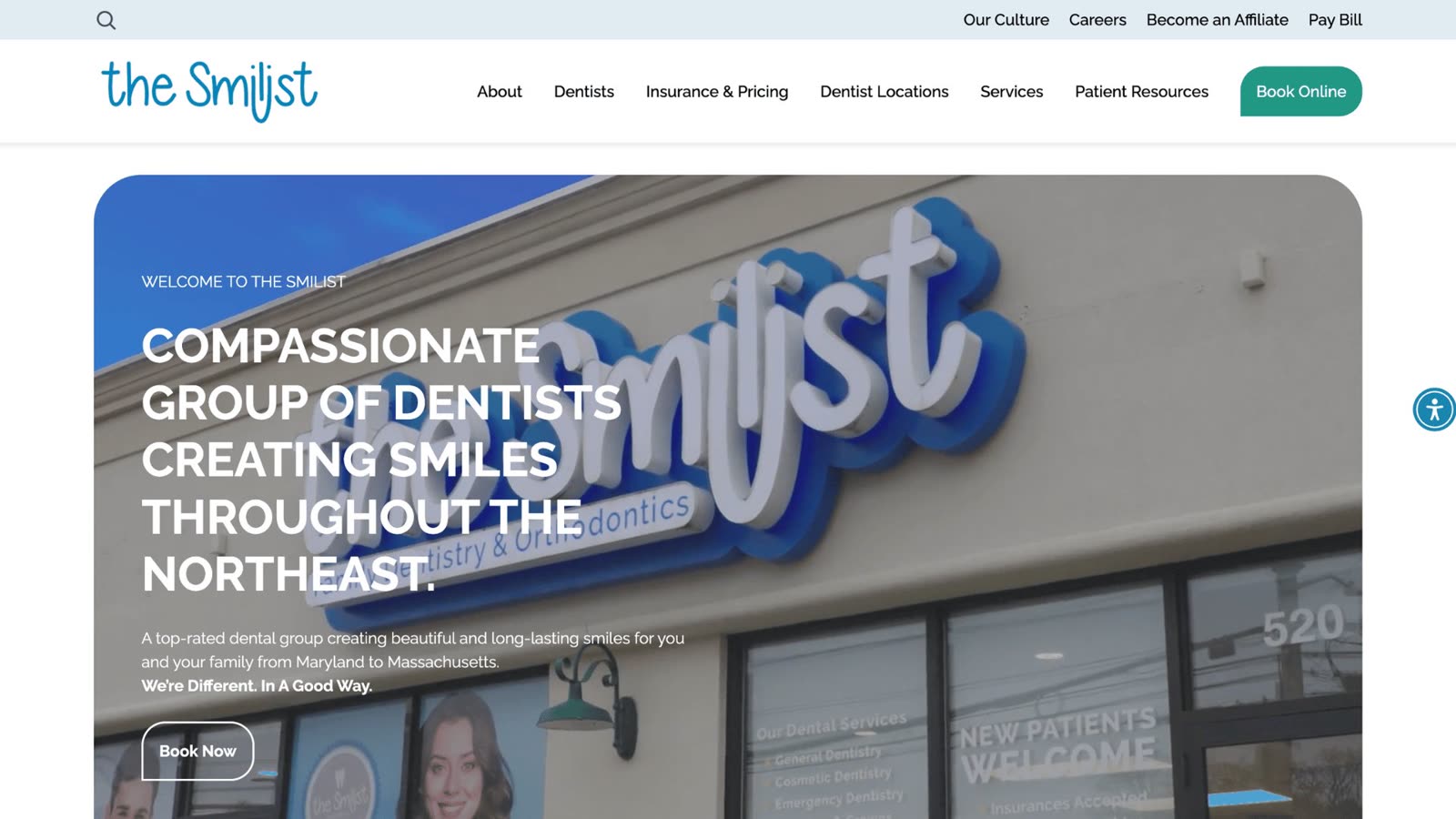
For five years, I ran social for The Smilist Dental — a network that grew from 4 offices to 40+ during my tenure. (The brand has since grown past 100 offices using the same playbook.) Multi-location healthcare social is its own discipline. Most of what works for a single brand or even a small chain falls apart at scale.
Here's what we learned.
1. Templates fail. Patterns work.
The first instinct in multi-location marketing is to build templates: "Every Wednesday, every office posts an [office name] doctor spotlight using this layout." This sounds scalable. It's actually fragile. The minute one office can't ship its Wednesday post — staffing issue, photo missing, doctor on vacation — the template breaks visibly. Patterns work better. Instead of "every office does X on this day," we built "across the network, this kind of content happens regularly." Some weeks an office shipped four doctor posts; some weeks zero. The network as a whole stayed on cadence even when individual practices didn't.
2. Local autonomy beats central control. Up to a point.
We tried two extremes. Full central control: every post written and scheduled by the central team. Result: feeds felt corporate, local teams disengaged, engagement dropped. Full local control: each office posts whatever they want. Result: brand voice scattered across 40 different practices, some excellent, some not. What worked was a middle layer: central team owned brand voice, content frameworks, and quality control. Local teams owned actual posting, real moments, and patient stories. We reviewed everything that mentioned the parent brand, didn't review most of what stayed local.
3. Patient stories are the only content that scales
You can run out of doctor spotlights. You can run out of office news. You cannot run out of patient stories — every practice has them, every day. The system we built was less about producing content and more about giving each office an easy way to capture and submit a patient moment when it happened. The central team turned those into polished posts. The story originated locally; the production happened centrally.
4. The brand voice fights you
Multi-location healthcare has a structural problem: each office wants to feel like a real, local, human place. The parent brand wants to feel recognizable, consistent, premium. These two goals are in slight tension every single post. We never fully solved it. The compromise: practices were allowed to sound human and casual; brand voice showed up in the visual system, the typography, the consistent feel of the photography. Words could vary by office. Look had to stay consistent.
5. Don't measure follower growth at the location level
Individual office accounts grow slowly and unpredictably. Holding each one to a follower growth target makes everyone miserable. We measured the network as a whole — total monthly reach, total appointment-driving engagement — and let individual office accounts grow naturally. Some grew fast, some didn't. The aggregate kept climbing.
6. The compounding play
The reason the system worked for five years isn't that any single piece of content was exceptional. It's that the patterns and systems were strong enough that the team running them could change — new content people, new office managers, even new agency partners — without the brand feeling different to patients.
That's the actual unlock in multi-location social. It isn't viral posts. It's a system that doesn't depend on any one person continuing to run it.